
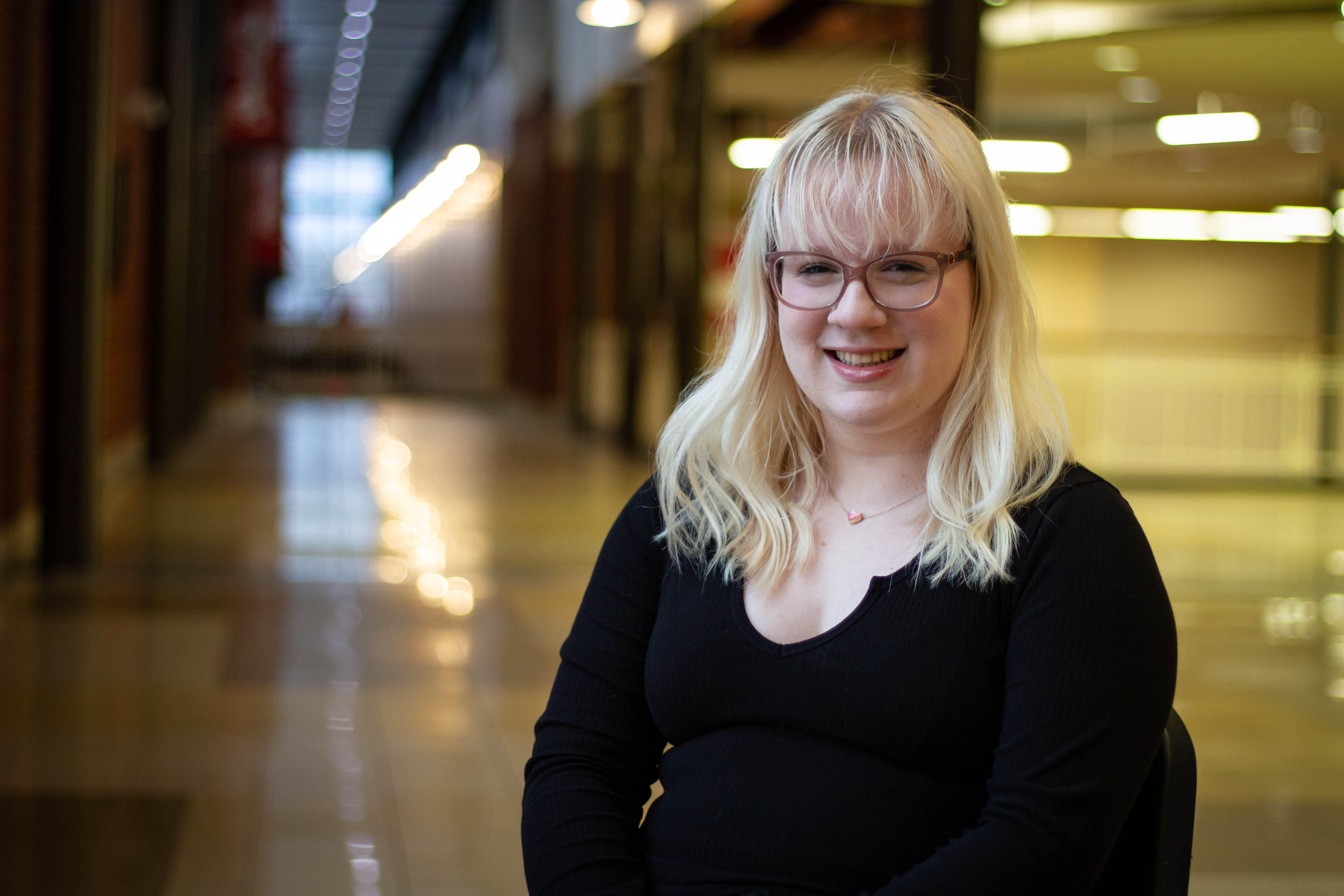
I am proud to offer this space to my daughter, Shelby, who will be writing series of book reviews of banned books. Get in some good trouble, kid!
According to PEN America, over 10,000 books were banned in public schools during the 2023-2024 school year as compared to the previous year with 3,362. This is not the first time that books have become political. Shakespeare faced censorship from Queen Elizabeth I in the year 1601, and New English Canaan by Thomas Morton was banned in 1637, as it was harshly critical of the puritans genocide of the Indegenous population. Nazi Germany burned over 100 million books across Europe by the end of WWII.
Nowadays, books are challenged for a plethora of reasons. The most prominent reason for bannings is the inclusion of sexual content or offensive language, but the options are endless. Books with LGBTQ+ content have recently come under scrutiny, as well as books containing violence, abortion, suicide, mental health issues, or religious viewpoints. LGBTQ+ and BIPOC voices are disproportionately targeted with book bannings.
For a country that claims to stand for freedom, censorship is not the answer. The most essential part of humanity is learning from our mistakes in history, and banning books with unique viewpoints completely erases marginalized voices. This severely limits and damages the education of our future generations.
From a young age, my parents taught me that when I see something I don’t like, I should resist. With more and more books being challenged every year, I know that this is something I am ready and willing to fight. Diverse literature is necessary for a thriving young generation and generally educated population. Hearing from different voices in literature is how we come to an understanding of different viewpoints.
So, with resistance in mind and freedom driving me, I will write reviews on banned books. I will recognize why they’re being challenged, explain how the story is necessary to hear, and analyze complex characters and themes that we can all relate to. Through this series of reviews, I hope we can learn to include rather than exclude.
As Oscar Wilde wrote in The Picture of Dorian Gray, “The books that the world calls immoral are books that show its own shame.”
Book Review #1: The Perks of Being a Wallflower
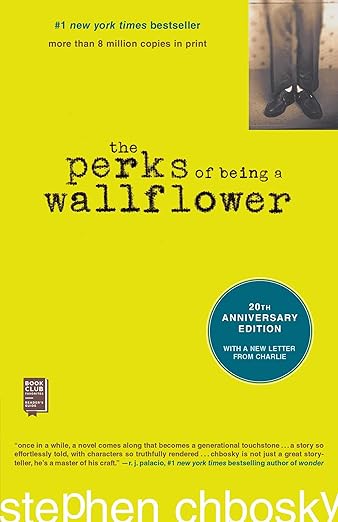
The Perks of Being a Wallflower by Stephen Chbosky was first banned way back in 2003 in Fairfax, Virginia by a group called Parents Against Bad Books in Schools. This was only four years after it was published in 1999. Since then it has been heavily targeted by book banning efforts, mostly due to it’s themes of drugs use, childhood incest, homosexuality, and profanity. From 2002 to 2010 it was banned publicly eleven times, and it’s only gotten more controversial with the passage of time, as it was challenged 68 times in 2023.
This novel is set in the 1990s, following quiet, awkward, but deeply kind Charlie, a freshman in high school. As Charlie navigates through a complicated year, the reader gets to learn and grow with him as he overcomes his anxiety and PTSD.
The plotline of Charlie’s older sister shows an abusive high school relationship. At the beginning of the book, Charlie’s sister’s boyfriend hits Charlie’s sister in secret, with Charlie being the only person to witness it. Charlie is shocked by his sister’s reaction or lack thereof. He comments on the fact that his sister is a feminist and has a strongly opinionated personality, but when faced with violence from a lover, she freezes and takes it. This also shows a parallel to Charlie’s mother, who is a much more passive type of person.
Make no mistake, a woman being beaten by her boyfriend is not just a product of this time in history, as domestic abuse is still a very prevalent issue today. According to the Children’s Hospital of Philadelphia, 1 in 3 teens in the US are victims of teen dating violence, whether that be physical, sexual, verbal, or emotional abuse. This portrayal is undeniably raw, as Charlie’s sister still wants to stay with her boyfriend even after he’d hit her, showing a cycle of abuse.
As Charlie becomes close with Patrick, it’s safe to assume that Patrick and Brad’s queer relationship serves as a large point of controversy in this novel, though it really should be anything but. I’m a huge advocate for queer representation in all types of media, but the representation doesn’t really mean anything unless it feels truly real. I can see myself in parts of Patrick and Brad’s relationship. I deeply understand the fear of coming out, but the sense of community that being queer brings to you.
Later in the story, Brad falls victim to peer pressure, child abuse, and what I like to call Closet Case Syndrome. His father accidentally walks in on Patrick and Brad, and he proceeds to beat Brad unconscious. A few days later, when Patrick attempts to talk to Brad in school, Brad calls him a homophobic slur twice, and a brawl ensues. Charlie luckily comes to the defense of Patrick. I think the most engaging part of Patrick and Brad’s plotline comes just after this, when Brad directly thanks Charlie for jumping to defend Patrick. This shows that Brad still deeply cares for Patrick and knows what he said was wrong.
LGBTQ+ teens are far more likely to experience child abuse from family members and bullying from peers. The stigma around homosexuality is debilitating at times, also leading to a much higher risk for suicide for LGBTQ+ youth. While Patrick and Brad don’t have an entirely healthy relationship, they serve as a harsh reality check for the horrors LGBTQ+ people face. This representation is necessary because of just how realistic it is.
Charlie’s grandfather has a relatively minor role in the book, but he is a very compelling character when you look beneath the surface. I read this book for the first time years ago, and I remember writing his character off as a racist small-minded old white guy, but I’m beginning to see just how complex he really is. Charlie’s grandpa had to work very hard as a teenager, and his endless work eventually paid off as he got to make a better future for his two daughters. One day, when his daughters come home with C’s on their report cards, he beats them as a warning to improve their grades. While this is definitely harsh and unnecessarily violent, it’s also understandable. While Charlie’s grandfather’s childhood cannot be seen as an excuse, it’s a perfect explanation.
People are not just black and white, and Charlie’s grandfather is a direct representation of that. He can be classified as abusive considering he beat his daughters, but in his mind, he was doing it so they would improve their grades and have a better future. Humanity is complex and violent and beautiful, and the first step we can take towards a better future is understanding people who are different from us.
This book is one of my favorites ever because every character just feels so real. Seriously, I know I’m going to go to school tomorrow and see half of these characters in the hallway, dealing with the same struggles. In an interview in 2013, Stephen Chbosky claimed, “For many kids, the book helped end a sense of isolation. It ended the idea that they were all alone in what they were going through, whether they were gay and they thought they were going to be punished for that, or if they were struggling with mental illness or depression and they thought that it never gets better. Charlie’s struggles, and his friends’ struggles, speak directly to those experiences.”
Banning The Perks of Being a Wallflower silences a million different voices, but more than anything, it erases the sense of hope that this book brings you. Hope for a better future, where you can feel safe to come out, overcome abusive relationships, and give your children a better future.
At the very end of the book, Charlie reflects on this past year and all that he’s learned, encouraging the readers that our obstacles don’t define us. He states, “I guess we are who we are for a lot of reasons. And maybe we’ll never know most of them. But even if we don’t have the power to choose where we come from, we can still choose where we go from there. We can still do things. And we can try to feel okay about them.”
Helpful Websites

 South Milwaukee Blog
Nice job, Shelby!
Thank you!
Great review, Shelby. I look forward to reading your insights on future books. They may not be books I’d read, so it is especially important that you bring them to the light. Thank you.
Hi Erik,
I love this series already. Thanks to you and your daughter for using your voices in a constructive way. I loved this book when I was in high school, and this review was a nice way to revisit all the reasons it resonated with me.
Keep up the good work!
Well written, Shelby!
Tell Shelby I so very much appreciate her report
Thank you, Shelby. I agree this book should and could be a part of the curriculum if guided by a teacher in reading it and understanding it and discussing it.
Beautifully done, Shelby!
Shelby,This was an amazing report! I now have to read it myself! You are a real asset for taking