A Recreation Department committee made up of community members and district employees has been exploring this idea since the fall. Please come to share your thoughts and help answer these two questions:
Is the community of South Milwaukee interested in building a community recreation center?
If so, what should be included in a potential community recreation center?
Come provide your input on April 3rd at 6:30 p.m. in the High School north gym!
UPDATE: A profile for Sophia Williams was added on March 25.
Election Day is fast approaching, and I am happy to again provide candidate profiles for local races. We started last week with candidates for South Milwaukee Municipal Judge: Incumbent Kelly A. Martyka and challenger Megan Zienkiewicz.
Today it’s the South Milwaukee School Board.
Thanks to the candidates for submitting information! Note: Just two of the four did, and I share their information below. Also running are incumbent Sophia Williams and challenger Matthew Scales.
Election Day is Tuesday, April 1, and in-person absentee voting begins today (Tuesday, March 18). Absentee ballots are already in the mail.
How long have you lived in South Milwaukee? I grew up in Waukesha and have lived in Southeast Wisconsin almost my entire life. My wife and I bought a home in South Milwaukee in 2011. We love this community and consider our house on 15th Avenue to be our forever home!
Family: Married, kids, etc. I will be married to my wife for 15 years in October. Together we have two beautiful daughters; our oldest attends South Milwaukee Middle School and our youngest attends Blakewood Elementary School. Together with our dog, a miniature poodle mix named Belle, we’re a pretty typical South Milwaukee family.
Occupation: I work in the exciting world of Medicaid compliance! This means I make sure medical facilities get what they need from State Government, and ensure that Medicaid HMO’s treat their members and providers fairly. I’m also the proud owner of 1:5,204,625th of the Green Bay Packers.
Relevant experience for this role
I have worked for non-profits and social service organizations throughout my career. I always wanted a career that offered a chance to support those in need and one that would reflect my values. My family attends First Congregational UCC on N. Chicago Ave. After 2 years on the Board of Trustees, this year I became the Chair of the Board of Trustees. The board oversees the operating budget and staff salaries for the over 170-year-old church. Most Sundays, you will also find me behind the control panel running the AV equipment for our YouTube stream. I am also wrapping up 5 years of being on the board of Wisconsin APSE (Association for People Supporting Employment First), which advocates for greater employment opportunities for people with disabilities. As a former non-profit program manager, I oversaw a program budget of over 2 million dollars and was responsible for more than 10 employees. I’ve managed diverse, interconnected teams at organizations with complex structure.
Why are you running for office?
In December, a longtime resident of South Milwaukee asked me if I would be interested in running, and expressed a need for someone like myself to be on the school board. I’m proud to say that when asked to help serve my community, I said yes. I was the first to officially declare candidacy this year and am excited at the chance to give back and ensure our school board continues to balance the needs of district administration, our teachers, students, and the community.
Why should voters vote for you?
My candidacy is supported by current School Board Members Angie DeFord, Andy Simmons and Sophia Williams, as well as former School Board Member Sarah Brooks. Around South Milwaukee you will find my signs in the front yards of at least 15 different families who are current or former teachers/school district employees. A lot of people with firsthand knowledge of what it takes to be on the South Milwaukee School Board know that I am prepared for the job.
I guarantee you that I will work collaboratively with the rest of the school board, district administration, and our teachers to make our South Milwaukee School District the best it can be. I will be open and accessible to our community and I am always willing to find common ground. We can’t make the world perfect, but we can always make it a little better, and I’m committed to doing everything I can to improve our schools. I want South Milwaukee to be a school district that the very best teachers retire from, not a stepping stone to a job in another city. To get there we need to work together towards a common goal.
After declaring my candidacy, I made a point of attending every school board meeting in person from that point forward. I want to hit the ground running, fully up to speed with recent actions by the School Board. I am committed to making our schools better for our community.
What is the most important issue in your race?
The district’s top priority should be improving our State Report Card scores. These scores give a big-picture view of how well students are doing and whether things are improving or getting worse. Right now, too many schools aren’t meeting expectations, achievement growth is down, and some schools have seen their overall scores drop. Schools across the US are struggling to regain their footing following the disruption of the pandemic. Creating more successful schools will take everyone’s buy-in and full effort. We all need to work together to improve the academic performance of our schools.
What is the biggest challenge facing the school district?
Teacher retention. Our teachers need better support, more resources, and a career path that encourages them to stay and grow with South Milwaukee School District. Seeing teachers leave mid-semester is heartbreaking. I’ve seen the impact teacher retention has on my own family and my friends’ families. A teacher leaving mid-semester should be viewed as a “canary in a coal mine.” Our School Board needs to be engaged in conversations with other teachers, school administration, and the affected families to figure out how to prevent it from happening again. I’ll say it again, I want South Milwaukee to be a school district that the very best teachers retire from, not a stepping stone to a job in another city.
What is the biggest opportunity in front of the district?
I’m always optimistic about the future, and I believe our biggest strength is our community. South Milwaukee is a great place to raise a family, and I truly believe our best days are ahead of us. Our downtown is on the upswing and our school district has a solid Strategic Plan with clear goals to improve our schools. I’m looking forward to the opportunity to make that vision a reality.
Last fall, I attended a public listening session and School Board meeting about possible plans to create a home construction program for South Milwaukee High School. The overwhelming sentiment shared by my neighbors and I at the meeting and listening session was that this program is vital to the long-term success of our high school students, but also that the deal presented was not a good one. It benefited Oak Creek far more than South Milwaukee and would have permanently taken away valuable community greenspace for the creation of a couple homes by mainly Oak Creek students. “Back to the drawing board,” was how the public discussion ended. I look forward to creating a home construction program for the benefit of our high school students that preserves community greenspace, serves South Milwaukee students, and continues the economic and residential redevelopment of South Milwaukee.
Does the issue of public school funding need to be addressed? If so, how?
Yes. In 2024 there were 241 referendum initiatives to increase funding for our schools. School districts all across the state asked for increased funding from their communities to fill the gap left by State funding; from the reddest districts in Northern Wisconsin to the bluest districts in Dane County. South Milwaukee passed a referendum a year ago and overall has done a good job of doing more with less in recent years, but the current funding from Madison is not sustainable in the long-term. Right now, the answer isn’t another referendum but to continue to lobby State Government to do more to fund public schools with some of the surplus. Let’s lean on our elected officials in Madison to do more to support our public schools.
Of the four core values of the school district, what is one you are passionate about and why?
I could write about how all four core values are important to our school district, but growth is the one speaking loudest to me right now. As I stated above, I am always optimistic about the future. South Milwaukee School District has the potential to do some amazing things. Our new STEM program is already literally building stuff that will go into outer space, the community is calling for a home building program, and now there’s an opportunity to build a Recreation Center. There are some amazing opportunities in front of us! Growth—it’s more than just academic growth. It’s greater community impact, and creating exciting new educational opportunities. Together we can make it happen!
How long have you lived in South Milwaukee? 2 and a half years.
Family: Married for 5 years, no children
Occupation: Elementary Music Teacher in Racine Unified Schools
Relevant experience for this role
I have been a teacher for 12 years, have served as a union representative for my building for 7 years, currently the secretary for Racine Educators United, and chairman of a non-profit in northern Wisconsin for 7 years.
Why are you running for office?
I had considered running after last spring’s local elections. I saw how groups that have been openly hostile towards our public schools had supported candidates in Racine, Oak Creek, Germantown, and other districts across southeast Wisconsin, and wanted to ensure we had a candidate who fully supports the public schools within South Milwaukee
Why should voters vote for you?
During my time teaching in Racine, I have been actively engaged as a teacher and an advocate for Racine Unified Schools, as well as for my students and families. I have worked with administration in the hiring of a new superintendent, engaged in budget discussions that impact classroom environments, and led student groups in voicing their concerns. Additionally, I have been working with the South Milwaukee PAC for the last 7 years through their Summer Youth Theater program as music director for the elementary-age shows and sound technician. I consider South Milwaukee home, and that our schools deserve leadership who will listen and act on input from all who are impacted.
What is the most important issue in your race?
Engagement with all stakeholders in the education process. Staff, students, parents, and administration should be working together as a team to improve and promote our schools as THE institutions of learning for all learners within our district.
What is the biggest challenge facing the school district?
The continued underfunding of our schools by the state of Wisconsin, along with the diversion of public funds to private schools.
What is the biggest opportunity in front of the district?
South Milwaukee is one of the most walkable districts in southeast Wisconsin. Our schools are truly neighborhood schools, and we should be able to leverage parent engagement within their children’s education. As a teacher, my students who lived near their schools had a greater connection to learning. Parental engagement and participation is crucial to our students’ learning.
Does the issue of public school funding need to be addressed? If so, how?
Yes. Our board has been vocal about state funding not keeping pace with inflation. With the additional funds being sent from South Milwaukee to Parental Choice Program (voucher) schools, South Milwaukee now has to do more with less. Our public schools are required to provide all necessary services for all students (speech therapy, occupational and physical therapies, deaf/hard of hearing services, etc), and we aren’t reimbursed at a rate that is equitable to private schools.
Of the four core values of the school district, what is one you are passionate about and why?
This is the hardest question to answer, as all four values are important in learning and engaging. Community without empathy is a group of people without connection to each other. Without equity of access, not all will grow to their fullest potential. These four values are interdependent. As a teacher, I have to be aware of all four in my classroom, in my planning, and in my engagement.
Sophia Williams
Age: 51
How long have you lived in South Milwaukee? I’ve lived in South Milwaukee for 23 years. The first election I ever participated in as a resident was the referendum to build the new high school. At the time, I didn’t have children—but I still supported it because I’ve always valued education and understood its impact on a strong, thriving community. My commitment to this district has never wavered. From that very first vote to now serving as School Board President, I’ve remained deeply invested in ensuring that all students in South Milwaukee have access to the opportunities they need to succeed.
Family: Married with two children, both of whom are proud recent graduates of South Milwaukee High School. Raising our family here has deepened my connection to this community and strengthened my commitment to ensuring every child has access to a high-quality education and a supportive school environment.
Occupation: Regional Campus Manager – Milwaukee Area Technical College
Relevant Experience for This Role
I currently serve as the President of the South Milwaukee School Board and have been a board member committed to ensuring our district remains focused on what matters most: student success and teacher support. I bring over 15 years of professional experience in education, including leadership in student services, academic support, and operations.
As board president, I played a key role in onboarding our new superintendent and worked closely with the South Milwaukee Education Association (SMEA) and district leadership to establish monthly meetings—strengthening communication, building trust, and facilitating a strong, collaborative working relationship between administration and staff. During the leadership transition in our district, I made it a priority to ensure that teacher and staff voices were heard and respected throughout the process. I believe those closest to our students are essential partners in shaping the future of our schools.
In my role as Regional Campus Manager at Milwaukee Area Technical College, I lead cross-functional teams, manage budgets, and partner with educators across K-12 and higher education. This role gives me a unique perspective on how well high school students are being prepared for college and careers, and it allows me to build stronger partnerships between our district and post-secondary institutions. I bring a strategic, student-centered mindset to the board, with a focus on accountability, innovation, and long-term planning.
Beyond my professional and board experience, I’ve also been an active community volunteer—serving as a scout leader, participating in local cleanup projects, and supporting neighborhood and school-based initiatives. South Milwaukee is not just where I live—it’s where I lead, serve, and give back.
Why are you running for office?
I’m running for re-election because my commitment to the students, staff, and families of South Milwaukee remains as strong as ever. We’ve accomplished incredible things this year—hiring a new superintendent, launching a five-year strategic plan, and passing an operational referendum that allows us to invest in the people and programs that make our schools strong. But I’ve realized that my work isn’t finished.
In a time of uncertainty and change, what our district needs is consistency—leadership that listens, understands our history, and remains focused on doing what’s best for students. I bring that steady leadership, along with a collaborative mindset and a deep belief in the potential of every child in our community.
I’m running to continue building on the progress we’ve made—to strengthen academic opportunities, support our educators, and ensure that every student leaves our schools prepared for a successful future.
Why should voters vote for you?
I bring experience, consistency, and a deep commitment to our schools. I’ve helped lead South Milwaukee through a period of transition, worked to establish a long-term strategic plan, and supported the successful passage of an operational referendum. I lead with empathy, I listen to all voices, and I make decisions based on what’s best for students.
I also believe deeply in accountability—not just for our teachers and staff, but for our leadership. One of the most important responsibilities of a school board is hiring a superintendent who can guide the district forward. We invested significant time and care in that process, knowing the impact it would have on our future. Our focus was finding a leader who listens—to our students, to our educators, and to our families—and who leads collaboratively, with the goal of uniting the district around shared values and goals.
Our new superintendent reflects that vision. Together, we’re working to build a school district that others look to for hope, strength, and the understanding that—no matter the challenge—we will face it head-on and overcome it, together.
What is the most important issue in your race?
Student success. The children in our district are the future of South Milwaukee, our state, and our nation. Supporting our students by ensuring educators have the tools they need and are empowered to do their best work is the most important issue in this race. When teachers are supported, students thrive—academically, emotionally, and socially.
After years of transition, we now have a stable and collaborative leadership team in place. This gives us a critical opportunity to focus on what matters most: addressing student mental health, strengthening academic support, and preparing every graduate for success beyond high school. We need steady, student-centered leadership on the board to build on this foundation and make lasting progress for our schools.
What is the biggest challenge facing the school district?
Balancing student needs with available resources continues to be the biggest challenge facing our district. We are being asked to do more with less—supporting student mental health, academic recovery, staff retention, and safety—while navigating rising costs and ongoing funding constraints. At the same time, our district is being measured by academic outcomes, and our students’ preparedness and test scores must improve.
Recognizing this, we developed a comprehensive five-year strategic plan that directly addresses these areas—focusing on academic growth, student wellness, and equity. We also passed an operational referendum to ensure we could dedicate funds toward teacher retention, classroom support, and student-focused initiatives. Strategic planning, transparency, and community trust are essential as we work to show meaningful, measurable growth and give all students the opportunities they deserve.
What is the biggest opportunity in front of the district?
We have the opportunity to reimagine education to better serve today’s students by making thoughtful, student-centered decisions that reflect the diverse goals, strengths, and needs of all learners. This means expanding career pathways, strengthening partnerships with families, and integrating social-emotional learning across the district.
We are committed to building programs that support every student—from those pursuing college to those seeking alternative paths. That includes developing a GED Option 2 program, ensuring access to Advanced Placement (AP) courses, and creating career pathway opportunities for students to earn industry-recognized credentials before graduation. By using data to guide our planning and investing in programs that meet students where they are, we’re preparing them not only for graduation—but for a meaningful future beyond high school.
Does the issue of public school funding need to be addressed? If so, how?
Absolutely. Public school funding is one of the most urgent and complex issues we face. The current state and federal funding formulas often fall short of what it truly takes to run a high-quality school district—especially when we’re expected to support academic growth, mental health, special education, safety, and teacher retention, all while costs continue to rise.
We must continue to advocate for long-overdue school funding reform at the state level. This means pushing for fairer funding formulas that recognize the unique needs of each district and provide consistent, adequate resources to support all students. But while we work toward that goal, we can’t afford to wait. That’s why we’ve also focused on finding local and creative solutions to bridge the gap.
These solutions include passing an operational referendum to protect class sizes and invest in teacher retention, partnering with local businesses to develop career pathway programs, exploring grants and alternative funding streams, and leveraging community partnerships to expand services and opportunities for students.
Most importantly, we’re committed to full transparency and accountability—ensuring that every dollar is tied to student outcomes and aligned with our strategic plan. Sustainable school funding isn’t just about dollars and cents—it’s about securing a future where all students have access to the opportunities and support they need to thrive.
Of the four core values of the school district, what is one you are passionate about and why?
I truly believe all four core values—Community, Growth, Equity, and Empathy—are equally important. They were chosen with intention and are embedded into our five-year strategic plan, which I was proud to help shape by supporting the creation of a policy that now requires strategic planning every five years. These values are not just guiding principles—they drive the decisions we make and the direction of our district.
Each value plays a unique and vital role:
Community strengthens our partnerships and keeps us connected to the families and residents we serve.
Growth reflects our dedication to continuous improvement for both students and staff.
Equity ensures every child receives the resources and support they need to succeed.
Empathy creates the foundation for a safe, welcoming school culture where students feel heard and valued.
These values are not stand-alone—they work together to create a school system that serves the whole child. As a board member, I’m committed to ensuring that every decision reflects these core commitments and builds a stronger future for all students.
The School District of South Milwaukee has acres of sustainable mixed prairie grass in and around the High School and Middle School.
Prairies are fire-dependent ecosystems that rely on regular controlled burns to continue to thrive. In addition, the burns remove invasive plants from the beds and allow new seed to be spread.
Between March 24th-28th a licensed contractor will conduct controlled burns of the prairie beds around the High School and Middle School. (The process is weather dependent, so an exact date is hard to determine).Additionally, the District is coordinating with the police and fire departments to monitor the burns.
Please be aware that these short burns produce bursts of thick black smoke as they remove biomass from the prairie.
If you have any questions or concerns, please email info@sdsm.k12.wi.us or call 414-766-5000.
Love this! From the South Milwaukee Little League …
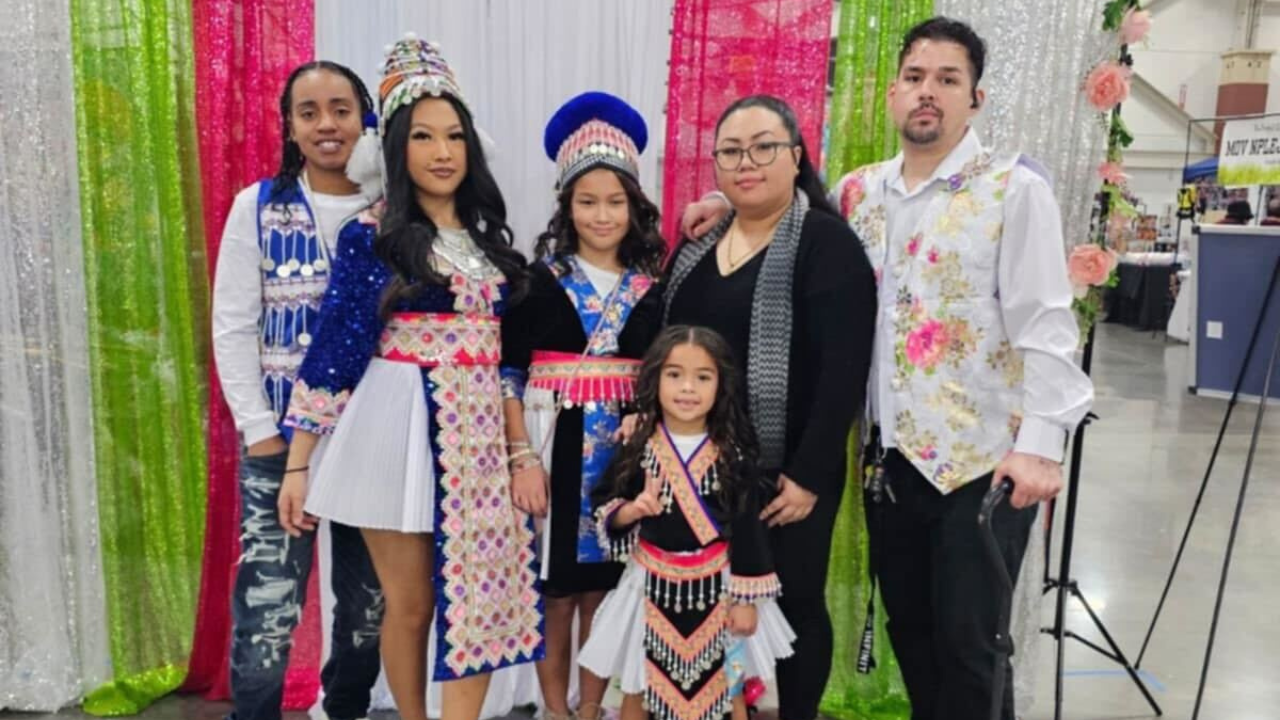
BREAKING NEWS – PLAY FOR FREE IN 2025! You read that right—South Milwaukee Little League is waiving registration fees for the 2025 season! This is your chance to get your kids on the field, learning skills, making friends, and having a blast at NO COST to sign up!
Who can play?
Boys & girls ages 4-14 living in or going to school in South Milwaukee, Cudahy, St. Francis or Bay View
NEW for 2025: Kids ages 4-7 from ANY city or school can now join!
What’s the catch? There isn’t one! Just reminder: fundraising (calendar raffle tickets) or buy-out & a volunteer deposit still apply.
FREE REGISTRATION GOES LIVE SUNDAY MARCH 2nd. Anyone who has already registered and paid for SMLL registration, WILL be getting their registration refunded.
From the Spring Market to St. Patrick’s Days to a terrific adaptation of “Chicago,” here is a sampling of events. Check out my Events page for the latest updates.
Friday-Sunday, March 14-16: “Chicago [Teen Edition],” presented by the South Milwaukee High School Theatre Company. Shows at 7:30 p.m. on March 14-15, 2 p.m. March 16. Details Saturday, March 15: South Milwaukee Spring Market, 9 a.m.-2 p.m., South Milwaukee High School. Details
Election Day is fast approaching, and I am happy to again provide candidate profiles for local races. We start today with candidates for South Milwaukee Municipal Judge: Incumbent Kelly A. Martyka and challenger Megan Zienkiewicz.
Later this week: South Milwaukee School Board.
Thanks to the candidates for submitting information!
Election Day is Tuesday, April 1, and in-person absentee voting begins on Tuesday, March 18. Absentee ballots are already in the mail. More information on the city’s Elections web page. Sample ballot
How long have you lived in South Milwaukee? I’ve lived in South Milwaukee for 7 years, but I’ve worked in South Milwaukee for almost 11 years.
Family: I just got married in December 2024, and have officially “adopted” my husband’s two dogs – Olive and Jack
Occupation: Probate and Estate Planning Attorney, Partnerships Consultant, Municipal Judge
Relevant experience for this role?
I have been the judge for the last three years, and have owned my own law practice in South Milwaukee for over 10 years.
Why are you running for office?
I’m running for re-election. I actually ran in 2019 for the first time. I ran because I wanted to give back to South Milwaukee for being so welcoming and supportive of me when I just started my law practice, and the municipal judge position was one within my area of expertise – the law. I love serving South Milwaukee with fairness, diligence, and compassion. The people coming to court and the community at large have created a supportive and thoughtful community, willing to listen, learn, and support each other wherever they can. It’s a wonderful place to live, to work, and to serve. I am so grateful for this community and the people I’ve come to share it with. I couldn’t be more thankful, then, for the opportunity to serve as your municipal judge for another term!
What is the most important issue in your race?
Two things come to mind. The first is, what is a municipal court and who is the municipal judge? People don’t always know the about the judge or the court, and that’s sort of a good thing! Most people don’t WANT to know the court!
Second, people have a lot of concerns when coming to court. Even some of the lowest level tickets could completely throw off their financial state. If they lose a license, they might lose their job or home, because they can’t get to work, and that income was the only income for the household. Who is able to watch their young children or elderly parents while they are at the court sorting things out? I want to meet people where they are and make sure that they understand the consequences of their actions, but also are not held back from being good, healthy, safe citizens of our community.
What is the biggest challenge facing the Municipal Court?
The biggest challenges I see facing our court and municipal courts all over our state today are necessity and separation of powers. Municipal courts are small. Our court in South Milwaukee consists of only three people, myself and two incredibly smart, helpful, supportive clerks. Many communities are considering doing away with their courts because it is a cost they can no longer bear. South Milwaukee is fortunate to have a small but mighty court that works hard every day to make the community healthier, safer, and stronger.
The other big issue is a separation of powers. Many people may not know this, but a municipal court is just like any other level of court. It’s its own branch of government that helps to serve as checks and balances on the other branches. It’s also not a revenue generating branch of government. In our court today, we focus on fairness, diligence, and compassion. Meeting our community members where they are. Finding solutions that will make the community safer and stronger. Being able to do this without the interference of other branches or expectations that do not align with the focus of the courts’ interpretation of law and goals is key.
What is the biggest opportunity for the court?
Courts, today, are at the center of creating fair, strong, and safe communities. We have the ability to work with our partners in government and the community to strengthen and support our communities to be healthier and safer for everyone. We have the opportunity to find solutions outside of dollars that will provide understanding to our community and compassion for those that may be in trouble. Courts also must remain the impartial, unbiased branch that helps provide the checks and balances required by our constitutions.
What are your foundational principles in deciding court cases?
The foundational principles I stand by are fairness, diligence, and compassion. We strive to make every hearing date and trial transparent, explaining the process and procedure, and providing information along the way to help defendants through the process the best we can. I know that coming to court can be daunting, so I have worked closely with my clerks to make sure we show understanding and compassion along the way. I am also diligent in staying on top of current best practices, reviewing each trial ordinance ahead of trial to best understand the aspects of the ordinance and any nuance through caselaw, and connecting with other judges for advice, guidance, and thoughtful support.
How long have you lived in South Milwaukee: Since 2018.
Family: Married in 2003. Husband: Tom We do not have children, but we do have a super cute Tuxedo cat.
Occupation: Retired after 20 years working as an attorney for the Wisconsin State Public Defender. Currently, I am an adjunct professor at Carthage College. I am teaching a variety of law classes, including: the rules of evidence and trial procedure, business, international and sports law. I am also a figure skating coach and figure skating program director.
Relevant experience for this role?
During my time at the Wisconsin State Public Defender’s Office, I spent countless hours in the courtroom which provided a wealth of experience related to due process, evidence, and trial advocacy. All of those skills are essential to effectively presiding over municipal court.
Additionally, I was the Local Attorney Manager for the Racine Public Defender’s Office, which allowed me to supervise our attorneys and participate in various criminal justice system initiatives, including the Wisconsin Veterans Treatment Court for the 2nd Judicial District. I was also the agency wide Racial and Ethnic Disparity Practice Coordinator. These roles provided me with opportunities to view the justice system from a holistic viewpoint, which is imperative in the role of a judge.
Based upon my experience, I have been asked to teach sitting municipal judges at the Wisconsin Municipal Judges’ Association Judicial Education Conference regarding the rules of evidence and trial procedure. I have frequently presented on issues surrounding Racial Disparity, including the Race Discussion Circles, Responding to Racism, Implicit Bias, and Racial Anxiety. I have also been published in the Wisconsin Bar Association’s Juvenile Law Handbook.
I have been honored as a Top Up-And-Coming Wisconsin Attorney in Super Lawyers and Milwaukee Magazine, and as a member of the Rubin Society of the Wisconsin State Public Defender for my work with children. I am the proud recipient of the 2016 Chiarkas Award from the Wisconsin State Public Defender in recognition of my innovative leadership efforts.
Why are you running for office?
I am motivated by, and enthusiastic about, this position because of my dedication to justice for all. I have spent a considerable amount of time in the courtroom as a litigator and I know the role a judge plays in shaping the experience of everyone involved. It is critical for all parties who come before the court to know that they will receive equal treatment. People appearing before the court will know that they will be treated with respect and are before a judge who will hear what they have to say, decide their case with an open mind, always grounded in the law.
Why should voters vote for you?
Voters should vote for me because I have the experience and knowledge that allows me to understand the important role that the judge plays in the justice system. Because of my experience, there is nothing that can occur in the courtroom that I am not prepared for and likely have not seen before. For that reason, I am the best candidate to run a fair, impartial and efficient courtroom.
What is the most important issue in your race?
The most important issue in the South Milwaukee Municipal Judge race is to ensure confidence in the court. It is critical for all potential future participants to know that their case will be handled fairly, efficiently and following the appropriate legal principles.
What is the biggest challenge facing the Municipal Court?
The biggest challenge facing the Municipal Court is to provide a transparent process where each participant clearly understands the process and walks away knowing they were treated fairly even if the decision is not in their favor. This can be accomplished through clearly communicating the court process to participants prior to and during court. Fortunately, my background and experience allows me to understand where confusion can come into play and how to effectively communicate during open court to solve those issues.
What is the biggest opportunity for the court?
The court, and more specifically the judge, has the opportunity to impact the litigants who come before it. The impact should leave litigants believing that the process was fair and based on the law, even if they do not agree with the outcome. This serves to preserve or even build confidence in the court system.
What are your foundational principles in deciding court cases?
The foundational principles for deciding court cases is the law. I will apply the law to all matters before me fairly and without bias.
At last night’s meeting, the Common Council approved a $3.2 million redevelopment project for 100 15th Avenue for 20 market-rate apartments.
Through the Bucyrus Foundation, the City of South Milwaukee is providing a $100,000 loan in order to support the project. The development team is expected to repay the loan by 2029, allowing those funds to be reinvested in future redevelopment opportunities in South Milwaukee.
“This project is a win for South Milwaukee and the Bucyrus Foundation, transforming an underutilized site into a modern residential property that will contribute to our ongoing economic development and redevelopment momentum.” – Mayor Shelenske
Happy to new life coming to this vacant space. See the full press release here.
Multiple proposals have come forward in recent years to redevelop the former Lakeshore Clinic, 100 15th Ave., a split-level 23,000-square-foot commercial building constructed in 1970 and vacant since 2018. The latest proposal is nearly identical to the last, but with a new property owner.
It’s being executed by Khalek Building Services along with Scott Crawford, Inc., South Milwaukee City Administrator Patrick Brever said. “They now own the property,” Brever said. …
Khalek Building Services of Oak Creek was involved in a previous proposal for the property from Villa Apartments, LLC, which formerly owned the 1.8-acre parcel. It was for the same number of total units but a slightly different breakdown of 18 two-bedroom units and two studios.
Prior to that, a project to create a community-based residential facility (CBRF) for up to 50 live-in residents was proposed but ran into some potential issues with state code and didn’t move forward.
Happy to see Strong Towns South Milwaukee continuing to walk the walk when it comes to making their community a better place … this time by organizing a much-needed local candidate forum.
From the group …
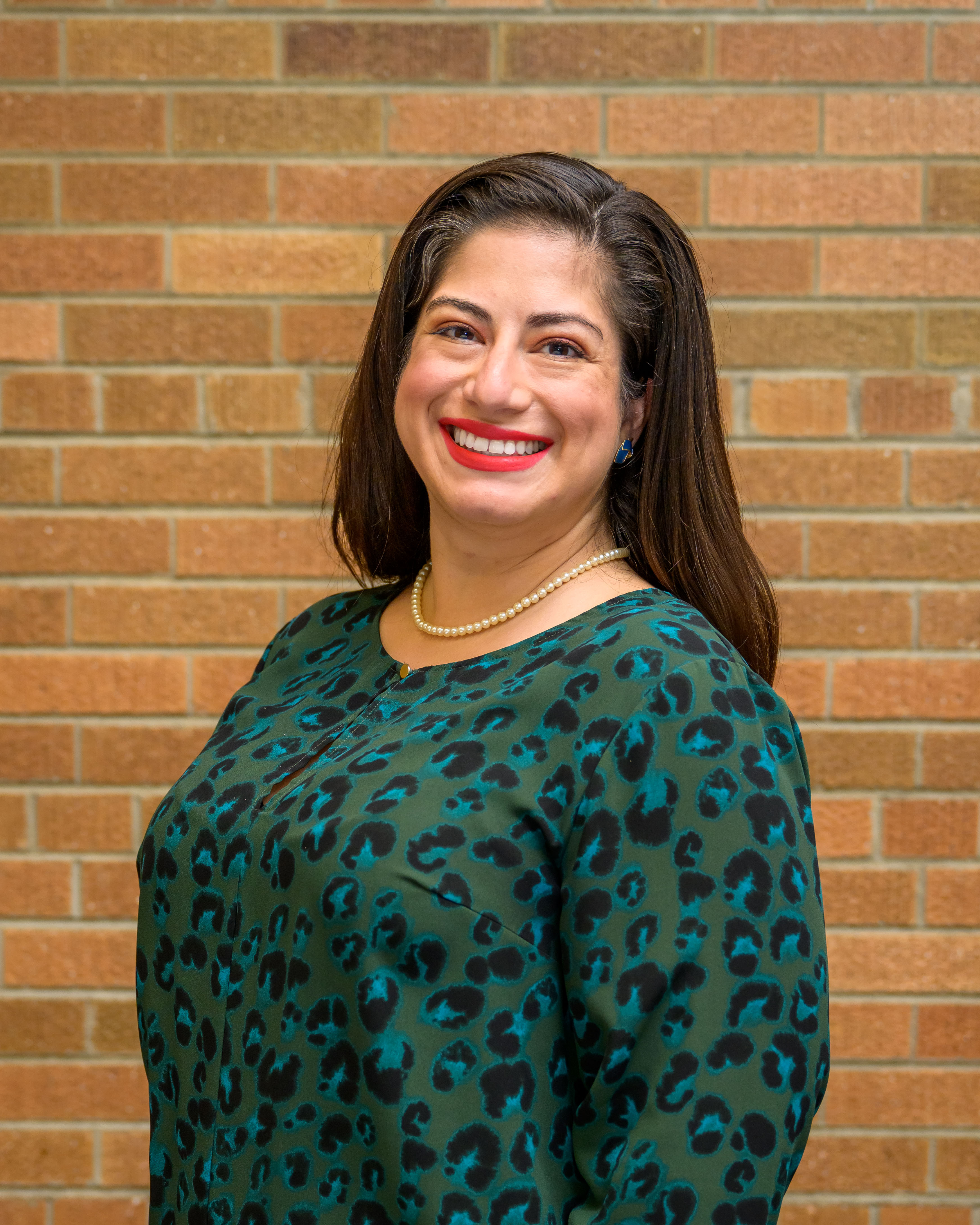
Join us for a non-partisan Candidate Forum where you’ll have the chance to hear directly from School Board and Municipal Judge candidates!
Date: Monday, March 3rd Time: 5:30 – 6:30 PM Location: South Milwaukee Public Library – Storyteller Room
This is a fantastic opportunity to engage with local candidates, ask questions, and become more informed about the issues that impact our South Milwaukee community.
Thank you to Strong Towns for organizing this, and to the volunteers who will make this happen. Learn more about Strong Towns on its Facebook page.
I am proud to offer this space to my daughter, Shelby, who will be writing series of book reviews of banned books. Get in some good trouble, kid!
From the time it was published in 2012, the graphic novel Drama by Raina Telgemeier underwent heavy criticism. It was #2 on the American Library Association’s most challenged books in 2016, only falling to #3 in 2017. It was also challenged in 2014 for being “sexually explicit.” Its inclusion of LGBTQ characters was labeled as being “confusing” and against “family values.” Despite all of this controversy, Drama was a widely celebrated novel. Some of the book’s achievements include winning the Stonewall Book Award in Children’s and Young Adult Literature in 2013, receiving a nomination for a Harvey Award, and being listed as a Best Book of 2012 by Publishers Weekly, The Washington Post, and School Library Journal.
When I started researching various banned books, I laughed out loud when I saw Drama so high on my list, and then I almost cried. This was one of my favorite books in my younger years, by far my favorite graphic novel. I first read this in late elementary school, maybe 4th grade. My mom and I were and still are frequent visitors of the South Milwaukee Public Library, and it was almost always on display there.
Drama takes place at Eucalyptus Middle School, where Callie Marin attends, following the story as she navigates through seventh grade and works on designing the set of the production Moon over Mississippi. Callie deals with your average middle school drama, cycling between a few crushes and friendships. Overall, it’s a coming of age story about inclusion and platonic relationships.
Early in the story, Callie meets and befriends a set of twins, Justin and Jesse. While they are both talented actors and singers, Justin likes to shine on stage while Jesse prefers to be out of the spotlight. This reflects a lot in their personalities, and eventually in the ways they come out of the closet. Justin is openly gay, and his coming out is much more casual. In reference to a boy Callie has a crush on, he says, “I’ve known Greg since second grade. He’s always been thickheaded, even if he is cute.” Callie is a bit surprised and flustered, and when she questions his sexuality, he responds with, “Gay? You can say it! I don’t mind.” They embrace on the next page as Callie warmly tells him, “Your secret’s safe with me.”
This heartwarming scene between Callie and Justin normalizes the idea of coming out during your adolescence and shows that being gay is just a small part of Justin, which Callie is completely accepting of. These days, coming out before high school is much more common than you think. According to the Pew Research Center, 24% of gay men and lesbians under age 30 say they first told a friend or family member that they were gay or lesbian before the age of 15. Being a part of the LGBTQ community is far more normalized now than in previous years, and Callie’s instant acceptance of Justin makes her a great role model for kids reading this book.
Another striking part of this novel is its diverse cast of characters. Not only is there lots of diversity as far as sexualties, but there’s many people of color featured as well. This is especially powerful considering this story is told through art, as there are different skin colors and body sizes on every page. Callie Marin is a white, cisgender, heterosexual girl, but still an amazing ally and advocate through the book.
I’m no stranger to people from different ethnicities and economic backgrounds. South Milwaukee High School has a minority enrollment rate of 41%, and 51% of students are economically disadvantaged as of 2023, according to state data. Still, I often forget that my reality isn’t the case for many students around the country. In 2022, a U.S. Government and Accountability Office Report found that over 30% of students, around 18.5 million students, attended schools where 75% or more of students were the same race or ethnicity. The milestone Brown v. The Board of Education came 70 years ago, yet we’re still feeling the effects of segregated schools. Telgemeier’s novel combats this, as her diverse set of characters prove to students that school is for anyone, no matter your skin color.
The end of the novel reveals that Jesse is also gay, which shocks Callie, as she thought he had been interested in her. Jesse overcomes his stage fright by stepping in for the female lead in the production, sharing a chaste kiss with the male lead, West, effectively saving the whole production. This is a huge moment for Jesse, and it leads him to eventually coming out and developing what might be a relationship with West.
Jesse’s stagefright being compared to his fear of coming out is so captivating. Jesse’s entire development shows the difference between him and Justin. They’re both gay, they just adjust to it differently. This fear of coming out is far too real for many adolescents nowadays. You can’t control who you love, so just imagine how terrifying it is to wonder if you’ll be judged for it. Justin and Jesse posed as my first real exposure to queer characters in the media. I didn’t realize the impact of that until over three years later, when I came out as bisexual. Funnily enough, I was in seventh grade as well, just like Callie. Also, please note that if Jesse and West’s kiss had been between a young girl and boy, no one would have minded.
The final and most prevalent theme in this novel is that of finding a home in theater, specifically stage crew. As someone who’s done stage crew for years, we quite literally slink around the shadows in all black, not getting much acknowledgement. If you can see us doing our jobs, then we’ve done them wrong. Telgemeier outright features the tech crew of Moon over Mississippi, and it makes my theatrical heart so happy!
Theater as a whole is so important to many young people, and that cannot be overstated. I’m currently involved in my school’s production of Chicago, where I’m playing Mama Morton, and rehearsals are seriously the best part of my day. When you’re on that stage you can just tell how much everyone loves the art form. Telgemeier, who grew up in theater, choir, and stage crew, perfectly portrays how impactful youth theater can be.
The diverse cast and themes of friendship in Drama make for a quick but very sweet read. The LGBTQ characters featured are incredibly realistic and amazing role models. People who have attempted to ban this book are grasping at straws, obviously trying to silence LGBTQ voices by claiming that a harmless novel is too mature. Book bannings at a whole have never been to protect our younger generation. They are intended to harm and silence minoritized communities, and we should stop pretending like there is any other goal in mind.
Telgemeier herself doesn’t understand why her book is being banned. In response to being on the ALA’s list of most challenged books for so many years in a row, she wrote, “I had a lot of people asking if I wanted to make a statement, but the statement is the book. My viewpoint is it’s better to live in a world where we love and accept each other than one where we don’t.”
Sad news, as Gregg “Coach” Dufek passed away on February 17.
From his obituary …
Playing pick-up games of football with his older brothers begin Gregg’s love of the game. The love of the game continued at St. Florian’s and continued at Milwaukee Boys’ Tech High School where he earned all-conference and all-state awards as a tackle. Gregg’s education continued at Montana State University where he played football for the Bobcats and earned all-Rocky Mountain Conference mention. In 1956 Gregg was a member the of National Championship team earning a trip to Arkansas to play in the Aluminum Bowl.
After graduation, Gregg returned to Milwaukee to begin his teaching and coaching career. At Pulaski, the Rams won two conference championships and finished as runner-up ten times. Gregg was the longest-tenured head coach at one school in the history of the city conference. Gregg was a part of a committee that helped set up the WIAA football playoff system, he served as president of the Milwaukee Coaches’ Association. He received numerous football honors including being inducted into the Montana State Athletic Hall of Fame in 1987. He received the Milwaukee City Conference Football Coach of the Year in 1995 and was selected as an assistant coach of the 1994 Shrine Bowl and co-head coach of the 1996 Shrine Bowl. Gregg was a member of the Wisconsin Football Coaches Association where after retirement he continued to promote the game of football and was inducted into the Wisconsin Football Coaches Hall of Fame in 1999.
In retirement, Gregg enjoyed being a member of the South Milwaukee Lions Organization, traveling, spending time with family, his summer golf leagues, and working in his gardens.
My thoughts, prayers and condolences go out to the entire Dufek familly and everyone who Coach touched in his years with us. His impact is lasting, on and off the field.
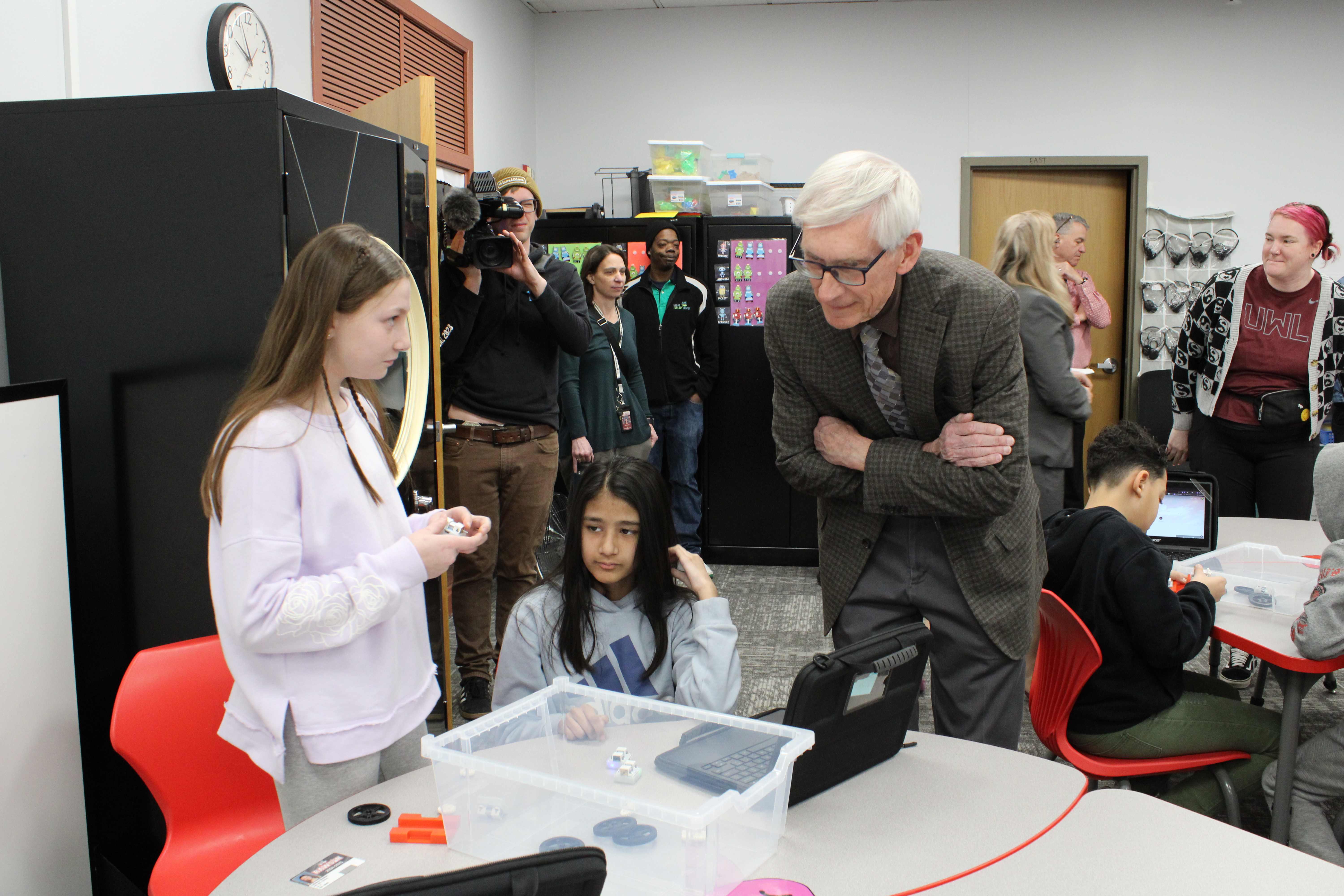
We’re so thankful for his visit and to Mrs. Rozanske for inviting him in to be a Secret Guest Reader for our combined Rawson second-grade classes. The Governor also toured the school, and had a special stop to see our new Science, Technology, Engineering, and Math Lab and talk to students and STEM Teacher Katy Casleton about our innovative STEM program. Mr. Evers also met with Rawson’s Nutrition Services Team and shared his dedication to his proposal to make school lunches free for all Wisconsin students.
Gov. Evers was in town to promote his proposed 2025-26 biennial budget, which makes a significant investment in public educuation across the state. Details here.
It’s Da Crusher, of course! Shot the night of Crusherfest, as we unveiled this statue to the world. Do you have a photo you’d like to share on the blog? Send it along.









 This is your chance to get your kids on the field, learning skills, making friends, and having a blast at NO COST to sign up!
 FREE REGISTRATION GOES LIVE SUNDAY MARCH 2nd. Anyone who has already registered and paid for SMLL registration, WILL be getting their registration refunded.








 Date: Monday, March 3rd
 Time: 5:30 – 6:30 PM
 Location: South Milwaukee Public Library – Storyteller Room








 South Milwaukee Blog